


by Brian Shilhavy
Health Impact News
Peer-reviewed research has shown for decades now that adding coconut oil to one’s diet, especially if one is replacing toxic seed oils, has tremendous impacts on those suffering with diabetes and excessive weight gain.
That research has continued through 2025 and here into 2026 with several new studies published in various peer-reviewed journals.
Most of these studies are conducted outside of the U.S., because this information has been heavily censored as it contradicts USDA and FDA dietary advice, in favor of drug interventions instead.
We have a whole website to counter the negative U.S. media reporting and false pharmaceutical claims with the light of the truth, at CoconutOil.com, especially our page on Peer Reviewed Research.
The pharmaceutical industry cannot make any money off of coconut oil, because it is a natural product that cannot be patented.
Therefore, most of the research the medical community has done on the health properties of coconut oil, has been on its most abundant fatty acid, Lauric acid, a medium chain fatty acid which is a known anti-pathogen which has been used for decades to fight pathogens, including in food preservation.
Coconut oil is nature’s most abundant source of Lauric acid, at around 50%. Human mother’s breast milk is a distant second, at around 16%.
And yet, tragically, most infant formulas sold for infants who are not breast-fed, do NOT contain coconut oil or Lauric acid, but soy protein and soy fat instead, which is extremely dangerous and toxic.
New Study on Virgin Coconut Oil and Diabetes
A very promising study was published a few weeks ago (June, 2026) in the journal Food Science & Nutrition, and the research was conducted in China.
The study specifically was targeting “diabetic kidney disease” (DKD), which is a huge problem in today’s modern culture.
The title of the study is:
Virgin Coconut Oil Attenuates Diabetic Kidney Disease via Gut Microbiota‐Metabolism‐Inflammation Axis Modulation in Type 2 Diabetic Mice
ABSTRACT
Diabetic kidney disease (DKD) poses a significant global health challenge, necessitating novel therapeutic interventions. Virgin coconut oil (CO), rich in medium‐chain fatty acids (MCFAs), has emerging metabolic benefits, but its renoprotective potential and mechanistic basis remain unexplored.
This study aimed to investigate the therapeutic effects of CO on DKD and elucidate its underlying molecular mechanisms through a multimodal approach. Network pharmacology and molecular docking were employed to predict CO’s bioactive targets and pathways.
Experimental validation was performed in a high‐fat diet/streptozotocin‐induced type 2 diabetic mouse model, with CO administered for 12 weeks. Systemic metabolic parameters (glucose, BUN, Scr, lipid profiles) and renal function were evaluated.
Renal histopathology (H&E, Masson staining), inflammatory markers (TNF‐α, IL‐6), oxidative stress indicators (GSH‐Px, SOD, MDA), and fibrosis markers (TGF‐β, Collagen IV) were quantified.
Gut microbiota composition (16S rRNA sequencing) and serum metabolomic profiling (LC–MS) were analyzed to identify systemic mechanisms. Computational analysis identified octanoic acid and decanoic acid of MCFAs as principal bioactive components targeting PPARα/γ and IL‐1β, modulating PPAR signaling and oxidative phosphorylation.
In vivo, CO significantly ameliorated hyperglycemia, reduced uremic toxins, and improved lipid metabolism. Renal benefits included attenuated inflammation, restored redox balance, and suppressed fibrosis.
Gut microbiota restructuring revealed decreased pro‐inflammatory Enterococcus and enriched probiotic Lactobacillus.
Metabolomics identified CO‐mediated regulation of arachidonic acid metabolism and riboflavin pathways.
Our findings demonstrate that CO exerts comprehensive renoprotection through a novel “gut microbiota‐metabolism‐inflammation” axis, suggesting its potential as a dietary intervention for DKD. These mechanistic insights warrant further clinical investigation of CO’s therapeutic applications in diabetic complications.
For previous research on coconut oil and diabetes, see the following articles:
Coconut Oil Effective in Treating Diabetes
#1 Most-read Study of 2018 in the Medical Journal Pediatrics is How a High-Fat Diet can Help Type 1 Diabetes
Research Continues to Confirm Coconut Oil’s Healing Properties for Diabetes
Big Pharma Failing Diabetics: Diabetes Can Be Prevented, Controlled, and Reversed Naturally
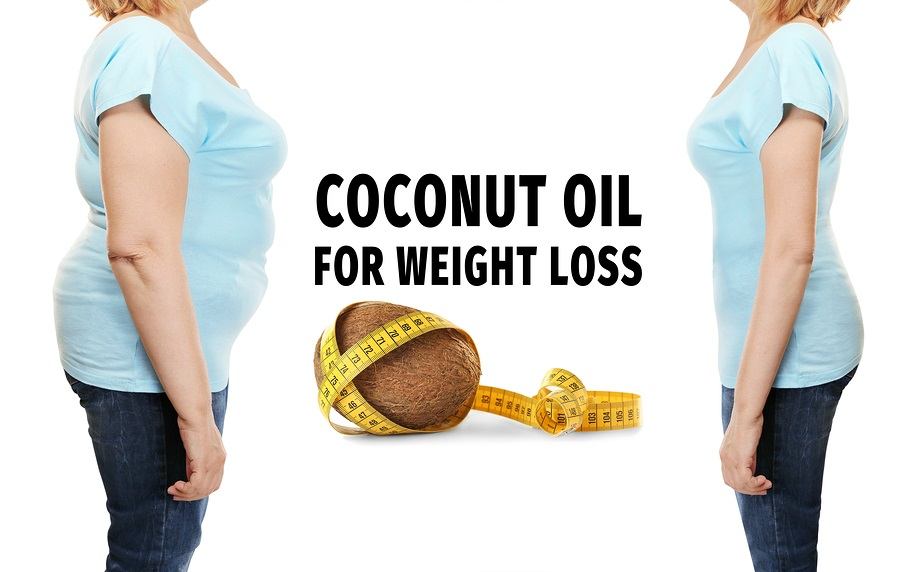
New Study on Virgin Coconut Oil and Weight Loss
A very interesting study was published earlier this year (2026) in the journal “Molecular Biological Reports“.
The study examined “Brain-Derived Neurotrophic Factor (BDNF)” which regulates feeding behavior, and it focused on people suffering from “Chronic ethanol (EtOH) consumption” (excessive alcoholic beverages).
The study is titled:
Neurotrophic and metabolic consequences of virgin coconut oil and ethanol: implications for growth and antioxidant defense
Abstract
The hypothalamus serves as a central regulator of metabolism, integrating signals pertinent to food intake and energy balance.
Brain-Derived Neurotrophic Factor (BDNF) is widely distributed in brain, including expression in hypothalamic nuclei, which regulates feeding behavior.
Chronic ethanol (EtOH) consumption has adverse effects on metabolic function, affecting the hypothalamus and striatum, a reward-associated region.
Virgin coconut oil (VCO), a dietary lipid rich in medium-chain triglycerides, which have been shown to modulate BDNF expression. Based on these findings, we hypothesized that chronic EtOH consumption would impair metabolic regulation and causes oxidative stress, while VCO would counteract these effects.
To test this, water drinking control and EtOH drinking Wistar male rats received water as vehicle or VCO by gavage (12 days). Growth, diet and fluid consumption were recorded throughout the experiment.
Hypothalamic BDNF, striatal oxidative stress, and serum metabolic markers following EtOH and VCO exposure were examined. Statistical analysis utilized t-test, two-way ANOVA and Kruskal-Wallis test.
Findings revealed that VCO reduced hypothalamic BDNF, decreased food and food caloric intake, and led to weight loss in EtOH exposed rats.
Metabolic effects were further modulated by alterations in serum glucose, cholesterol, and triglycerides, where EtOH lowered glucose and cholesterol due to reduced caloric intake, while VCO increased all three markers.
Additionally, VCO restored oxidative stress markers in the striatum, potentially mitigating EtOH- induced neurotoxicity by normalizing catalase and peroxide levels.
This study highlights the complex interaction between EtOH and VCO in metabolic regulation, oxidative stress, and neuroendocrine function, warranting further research to explore its potential therapeutic implications.
Here are some previous articles on Coconut Oil and weight loss:
Coconut Oil for Weight Loss
Coconut oil not enough for Dr. to lose weight – had to quit soy also
Coconut Oil Benefits Change One Person’s Life
DISCLAIMER: I sell the best Virgin Coconut Oil in the U.S. and I will make money if you buy it from me, which is what allows me to keep publishing articles here for free, with no paywall. Health Impact News has almost 10,000 articles published now over a 15-year span with no paywall, which can be searched here.
Comment on this article at HealthImpactNews.com.
 More Published Studies Show Virgin Coconut Oil is Effective for Diabetes and Weight Loss
 Studies Continue to Show Coconut Oil Improves the Lives of People with Parkinson's Disease
 More Studies Prove that Coconut Oil is Best for Oral Health Beating Commercial Products and Drugs
 HHS Secretary Kennedy Breaks His Promise: "War on Saturated Fat" Kept in Tact with New U.S. Dietary Guidelines
 Research Continues to Show Virgin Coconut Oil's Effectiveness in Treating Cancer