



by Brian Shilhavy
Health Impact News
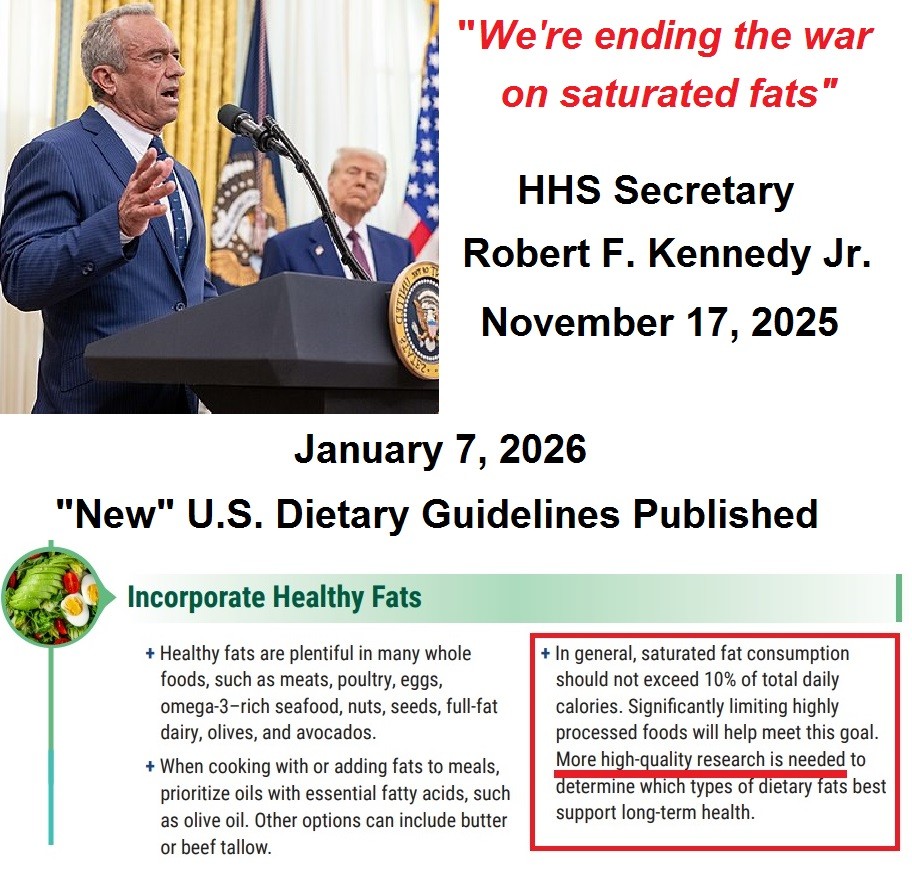
With all of the news headlines of the past week, you may have missed the announcement that the USDA has “changed” their U.S. Dietary guidelines under HHS Secretary Robert F. Kennedy Jr.
They created flashy new websites, and turned the traditional “Food Pyramid” on its head, something that real food nutritionists have been recommending for decades, putting carbohydrates on the bottom, instead of at the top.
At the top they illustrated fats, proteins, fruits, and vegetables instead.
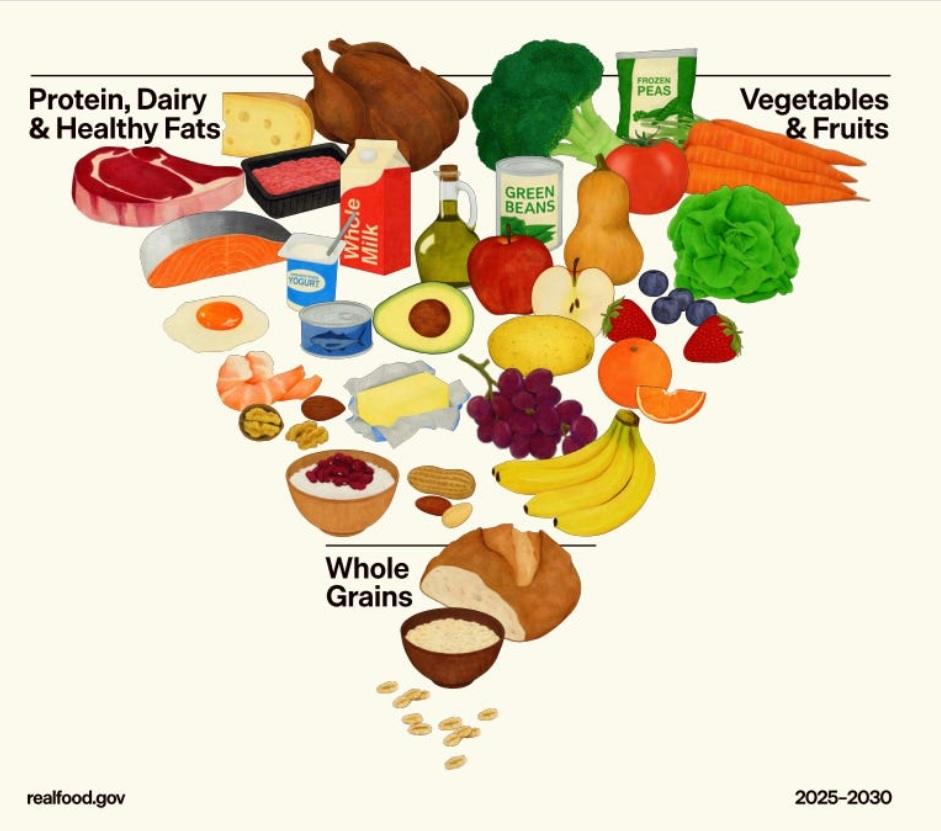
So far so good, until you start reading the actual recommendations.
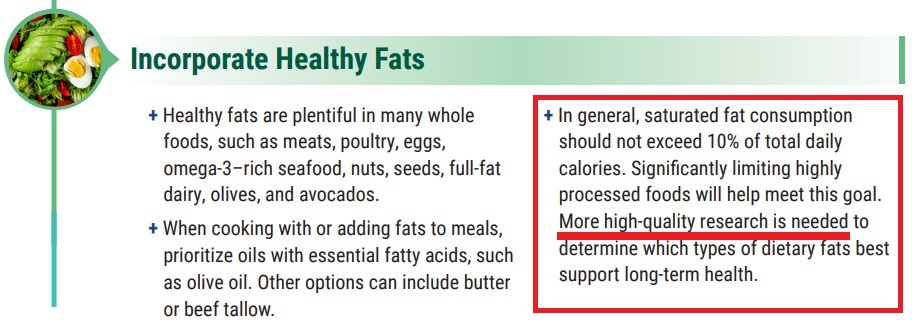
Both HHS Secretary Robert F. Kennedy, Jr., and FDA Commissioner Marty Makary had been promising for almost a year that they were going to end the “war on saturated fats.”
But in the end, the USDA recommendation to limit one’s total daily calories to 10% or less of saturated fats, which has been the USDA recommendation for over 45 years now, was kept in tact.
As I have been reporting for over 2 decades now, the U.S. Government just simply cannot afford to admit that saturated fats are healthy, traditional foods, because it would upset the entire pharmaceutical narrative that saturated fats lead to high cholesterol, which they claim leads to increased heart disease, and is the dietary philosophy that supports $billions in revenues for drugs that artificially lower one’s cholesterol levels.
If the U.S. Government all of a sudden admitted that there is no scientific basis that saturated fats and cholesterol are harmful, it would open the floodgate of lawsuits from so many people who have suffered harm from this dietary advice for more than 45 years now.
Nutritional journalist Nina Teicholz, PhD, whose name you find in Health Impact News articles for over a decade for opposing the “war on saturated fats”, has a Substack page now and commented on the “new” dietary guidelines on fats.
Butter Is Not Back: The Broken Promise on Saturated Fats
Despite months of pledges to “end the war on saturated fat,” the 10% cap in the updated US Dietary Guidelines will remain—creating a contradictory document.
Excerpts:
Delayed for months, the highly anticipated new U.S. Dietary Guidelines for Americans will be released to the public tomorrow, followed by a large (invite-only) event at the U.S. Department of Health and Human Services (HHS) on Thursday.
The one widely touted reform was an “end to the war on saturated fat,” as both HHS Secretary Robert F. Kennedy, Jr., and FDA Commissioner Marty Makary have repeatedly pledged since taking office—including as recently as Nov 27th.
This was a revolutionary proposal. The cap on saturated fats has been a bedrock piece of advice since the launch of this policy in 1980, and it is why so many Americans avoid red meat, drink skim milk, and opt to cook with seed oils over butter.
Yet I learned from two administration officials that saturated fats will not be liberated after all.
The longstanding 10% of calories cap on these fats will remain.
At the same time, the guidelines’ language will encourage cooking with “butter” and “tallow,” both of which are high in saturated fat.
The 10% cap means approximately 20-22 grams of saturated fat daily for the average 2,000-calorie diet. Here’s what that looks like in practice:
• 1 cup whole-fat yogurt for breakfast: ~5 grams
• 1 chicken thigh with skin, cooked in 1 tablespoon butter for dinner: ~12 grams
Total: ~17 grams of saturated fat
That’s nearly your entire day’s allowance in just two modest meals—no cheese, no butter on your vegetables. Add a splash of cream in your coffee and you’re over the limit.
Or consider another day:
• 2 eggs cooked in 1 tablespoon of butter: ~13 grams
• 4 oz ribeye steak: ~6 grams
• Broccoli with 1 tablespoon butter: ~7 grams
Total: ~26 grams of saturated fat
Already over the limit—and you’ve only eaten two meals. Anyone actually following the 10% cap will need to continue cooking with seed oils while limiting whole milk, cheese, and red meat.
Butter is not back. Steak is not back. Tallow will not be on the menu anytime soon—at least not for anyone trying to follow federal nutrition advice. (Full Article.)
The one food source with the highest amount saturated fats, of course, is coconut oil. Coconut oil is over 90% saturated fats, so according to the USDA dietary guidelines, you should not eat more than about a tablespoon of coconut oil a day.
The problem with that is that most people see therapeutic results by eating more than 3 tablespoons a day of coconut oil, and some people suffering from Alzheimer’s and other neurological diseases consume 2-3 times that, with some Alzheimer’s patients seeing a remission and a regaining of their memories.
I was the first one in the U.S. to re-introduce coconut oil into the American diet, with our Virgin Coconut Oil made by hand in the Philippines back in 2001.
The customer testimonials were amazing, and sales of our Virgin Coconut Oil were rapidly increasing, taking market share away from the seed oil producers selling soybean and corn oil, two oils that were not traditionally in the human diet prior to WW II and the development of expeller-pressed oils.
So the FDA came after us, threatening to shut us down. We had to hire a regulatory attorney in D.C. who had a history of litigating against the FDA, and we were forced to remove all of our customer testimonials as well as all the peer-reviewed research studies to a different website that was not selling coconut oil, which today is CoconutOil.com.
This is actually the genesis of Health Impact News, as our first major topic area was real food nutrition.
These “new” dietary guidelines on fats are still claiming that there is not enough research on saturated fats to claim they are healthy! But myself and many others have been publishing this research for over 2 decades now!
Here is our page on the peer-reviewed research on coconut oil that we have maintained over the years:
Peer-Reviewed Research on Coconut Oil
We have a page on research regarding saturated fats as well, which we have not maintained over the years, so most of these articles are almost 20 years old now!
Research on Saturated Fats
Here is one from Nina Teicholz that was published in 2007, and is now only available on Archive.org:
What if bad fat isn’t so bad?
No one’s ever proved that saturated fat clogs arteries, causes heart disease
by Nina Teicholz
Men’s HealthExcerpts:
Suppose you were forced to live on a diet of red meat and whole milk. A diet that, all told, was at least 60 percent fat — about half of it saturated. If your first thoughts are of statins and stents, you may want to consider the curious case of the Masai, a nomadic tribe in Kenya and Tanzania.
In the 1960s, a Vanderbilt University scientist named George Mann, M.D., found that Masai men consumed this very diet (supplemented with blood from the cattle they herded). Yet these nomads, who were also very lean, had some of the lowest levels of cholesterol ever measured and were virtually free of heart disease.
Over a decade ago a documentary produced on ABC in Australia caused so much controversy, that it was banned and at one time almost impossible to find on YouTube anymore.
We published it, and to this day this two-part documentary is still one of the best sources exposing the “war on saturated fats” by exposing the “cholesterol myth” that leads to prescribing statin drugs.
The Cholesterol Drug War: ABC Australia Bans Documentary Exposing Statin Drug Scandal
If you want to learn how USDA diet nutrition started demonizing saturated fats, this is probably the best article published on its history by Mary Enig, PhD, and Sally Fallon many years ago:
The Oiling of America
See also this article we published in 2014 and read all the comments there:
How Long did YOUR Ancestors Live While Eating BACON, LARD, & WHOLE MILK?
Sadly, the U.S. Government’s nutritional advice on saturated fats has still not changed. And while Kennedy himself promotes saturated fats, the U.S. dietary guidelines are what will be followed in any federally-funded food programs, which affects about 25% of the population, as Nina Teicholz explains:
…. the roughly 30 million children eating school lunches daily, plus military personnel, and the vulnerable populations—elderly and poor Americans—who receive food through federal programs, roughly 1 in 4 Americans each week.
These programs are required by law to follow the Dietary Guidelines.
For them, the numerical cap will trump any contrary language about butter and tallow. Cafeteria managers and program administrators will continue to adhere to the 10% limit, because that’s what the law requires.
For these captive populations, seed oils will remain the mandated cooking fat. The encouraging words about butter and tallow will essentially be meaningless. (Source.)
This sounds similar to the “changes” in vaccine “recommendations,” doesn’t it?
The rhetoric changes, but the actual government policies, sadly, do not.
Learn more about saturated fats – Over 400 articles.
FREE eBook!

Comment on this article at HealthImpactNews.com.
 HHS Secretary Kennedy Breaks His Promise: "War on Saturated Fat" Kept in Tact with New U.S. Dietary Guidelines
 Research Continues to Show Virgin Coconut Oil's Effectiveness in Treating Cancer
 Coconut Oil Continues to Benefit Alzheimer's Patients over Drugs as Studies Continue for Neurological Benefits
 How the Simple High-Fat Low-Carb Ketogenic Diet Continues to Change People's Lives
 New Studies Continue to Show that Coconut Oil is the Best Oil for Treating Skin Conditions and Maintaining Healthy Skin and Teeth